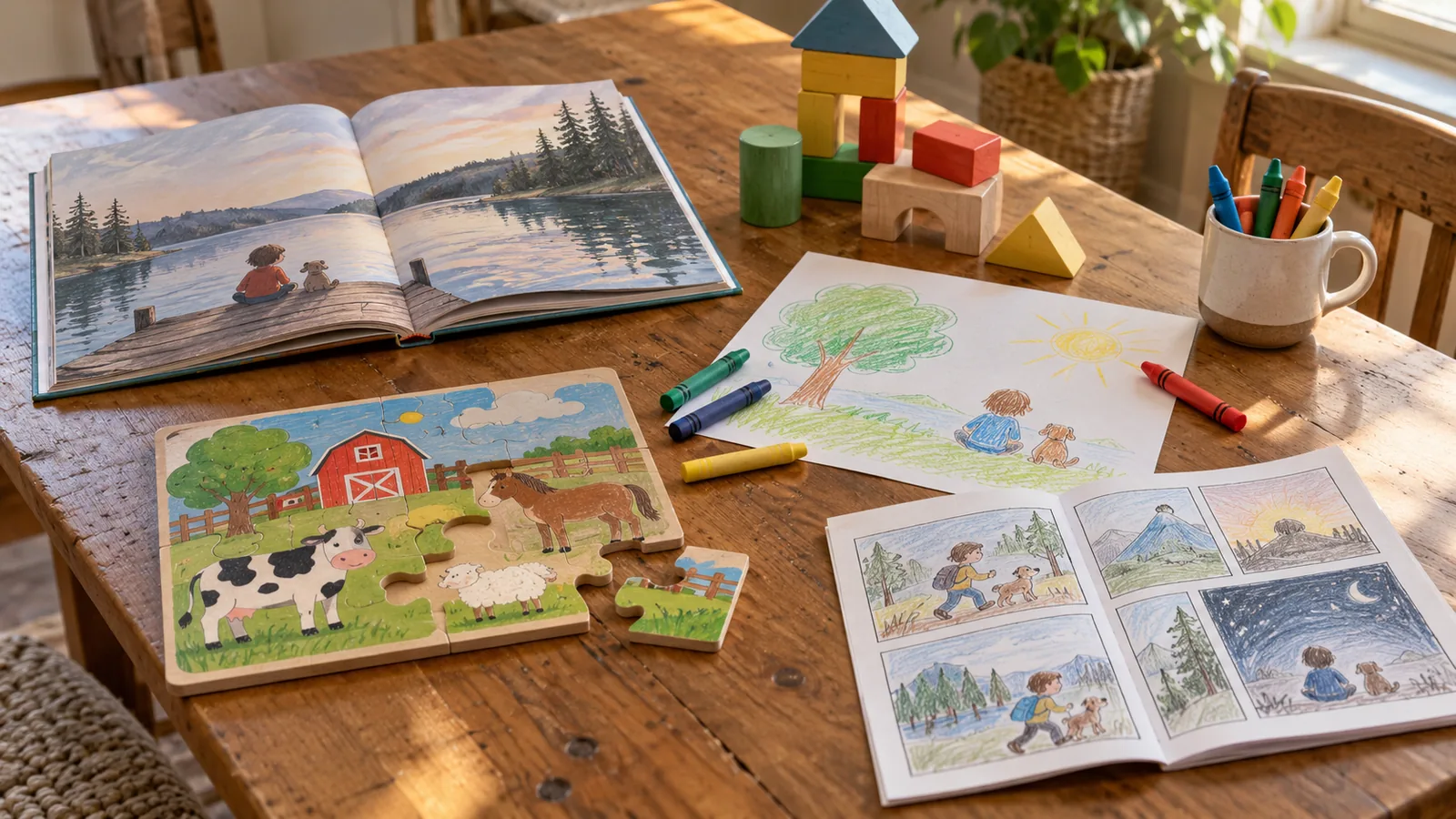
Some afternoons, you need to fold laundry, finish dinner preparations or sit down with your own book. A familiar quiet-time routine gives your child something enjoyable to do alongside that everyday life. There will still be questions and missing puzzle pieces. You can build those into the plan.
About this guide: written by the UXREAD team. We make the reading app mentioned below. Activity setups are suggestions to adapt at home.
Quiet time activities by age
Use these ages as starting points. Choose for your child's interests, abilities and support needs, including on days when an easier favourite feels right.
| Age | Activity choices | Your role |
|---|---|---|
| 1–2 | Picture books, large blocks, simple matching | Join in and supervise closely |
| 3–5 | Drawing, puzzles, familiar stories or pretend play | Set up, begin together and stay nearby |
| 6–7 | Puzzles, story drawing, listening or following along | Offer a manageable start and help as needed |
| 8–9 | Reading, comics, suitable longer stories | Share choices, check content and remain available |
How to introduce quiet time for kids
Pick a moment that already has a recognisable place in your day, such as after lunch or after coming home. Leave room for food, movement and connection first. The CDC recommends simple, predictable routines so children know what comes next.
Prepare one familiar space with suitable materials within reach. Offer two choices and begin together, then move to something nearby when appropriate. ZERO TO THREE's independent-play guidance supports suitable toys, realistic expectations, a shared beginning and an adult close by.
Start with a short attempt and notice how it feels. Quiet time can include talking, humming or moving between positions. It is a welcome part of the day, never a punishment or a requirement to stay alone.
Quiet activities for toddlers aged 1–2
At this age, plan for participation and close supervision. Choose age-suitable materials, follow their safety instructions and keep small pieces out of reach.
- Picture books: put two familiar board books on a mat. Open one together; your toddler turns pages or points while you name pictures and help.
- Blocks: place a few large, suitable blocks beside you. Build a small tower together, then let your child stack or arrange while you stay engaged.
- Matching: lay out two pairs of large matching toys. Show one pair; your child finds the other, with you helping throughout.
Use fewer objects if the setup feels busy. Looking at one page together can be enough today. For choosing and introducing listening, see our toddler audiobook guide.
Quiet time for preschoolers aged 3–5
Keep choices familiar and setup simple. You might offer drawing on one day and a puzzle on another.
- Drawing: set out paper and suitable crayons. Begin a picture together; your child adds marks or a scene while you help with materials nearby.
- Puzzles: place a familiar puzzle on a clear surface. Find the first pieces together, then let your child continue; reduce the pieces or help when needed.
- Stories and pretend play: put a favourite soft toy beside an adult-selected audio story. Start playback together; your child listens or acts out a scene while you handle controls and questions.
Some children prefer blank paper to a prompt, or company to an audio story. Our preschool quiet-time activity guide has eight detailed setups, adaptations and cleanup ideas.
After-school quiet time for ages 6–7
Offer a predictable option after your child has had a chance to settle. Match the challenge to today's energy and current skills.
- A familiar puzzle: leave it on a tray with the picture visible. Help find a starting point; your child assembles a section and can save it for later.
- A story scene: offer paper and pencils after a familiar tale. Your child draws a favourite moment; you listen if they want to explain it.
- Listen or follow along: choose suitable text and start narration together. Your child listens, or views the words in an on-screen read-along activity; you help with navigation.
A child who finds reading tiring can choose pictures or listening. Keep this a choice rather than another piece of homework.
More choice for ages 8–9
Common Sense Media's age guidance describes growing independence and interest in more involved stories, while stressing individual differences. Let your child help choose.
- Independent reading: put an appealing book or comic in a comfortable spot. Your child reads at their pace; you help choose content and discuss it if invited.
- Make a comic: offer folded paper and pencils. Your child invents characters and panels; you can draw the boxes or write dictated words.
- A longer story: preview a suitable book or recording and agree on a stopping place. Your child listens to a section; you remain available for questions or a change.
Follow interests such as animals, mysteries or funny characters. A longer story is an option, not an age milestone.
An everyday quiet-time routine to repeat
Keep the sequence familiar and the length flexible. This checklist is a suggested routine you can try today.
- Choose the moment: pick a suitable point in the day.
- Prepare: put familiar materials in a comfortable, safe space.
- Offer two choices: let your child select one.
- Start together: move to a nearby activity only when appropriate.
- Reconnect and tidy: notice what they made or enjoyed, then put things away together.
For a hypothetical laundry-time setup, you might say: “You can choose a puzzle or a story. I'll be here folding laundry.” Begin alongside your child and respond when needed. If you both end up looking at the book, that is still a worthwhile afternoon.
When quiet time needs adjusting
- Frequent interruptions: check whether your child needs help, comfort or a simpler start. Sit together again or shorten the attempt.
- Rejecting both choices: acknowledge the response. Try connection, movement or a different moment before offering one familiar option again.
- Boredom: suggest one small change, such as a new character in a drawing. Leave space for their idea too.
- Siblings: give each child a spot and suitable materials. Keep older children's small pieces away from younger children; offer separate listening when shared sound bothers someone.
- Difficulty ending: explain what comes next and offer a finishing action. Save a puzzle on its tray or mark the story's place.
Adjust lighting, sound, seating or the amount of adult company for your child. An interrupted routine gives you something useful to change tomorrow.
Questions about quiet time
What is quiet time for kids?
It is a flexible part of the day for calmer activities such as books, drawing, puzzles or listening. Adult help and conversation can be part of it.
How do I introduce quiet time?
Choose a familiar moment, prepare a space and offer two manageable activities. Begin together, stay available and reconnect afterwards.
How long should quiet time last?
There is no single duration for every child. Start with a short attempt and adjust to your child's comfort, interest and support needs.
What if my child keeps asking for help?
Help them and check the activity's difficulty. Use fewer materials, demonstrate again or stay alongside them.
How can siblings of different ages share quiet time?
Offer separate age-suitable materials in the same supervised space when practical. Different activities and finishing times are fine.
Can audiobooks be part of the routine?
Yes, if your child enjoys them. An adult chooses suitable content, checks the volume, starts playback and remains available.
Try story listening with UXREAD
UXREAD generates narration from book text. An adult selects and previews suitable text, including permitted EPUB or TXT imports, and handles setup. Optional parent-voice narration uses a consenting adult's recording to generate speech; preview the result before sharing.
UXREAD is on Google Play; iPhone availability is pending. Continued access after the trial requires a paid subscription. Free book files and app access have separate terms; check the current offer and each story's suitability.
Explore read-aloud stories for your family's quiet-time routine. Pick an activity, begin together and see what fits today.